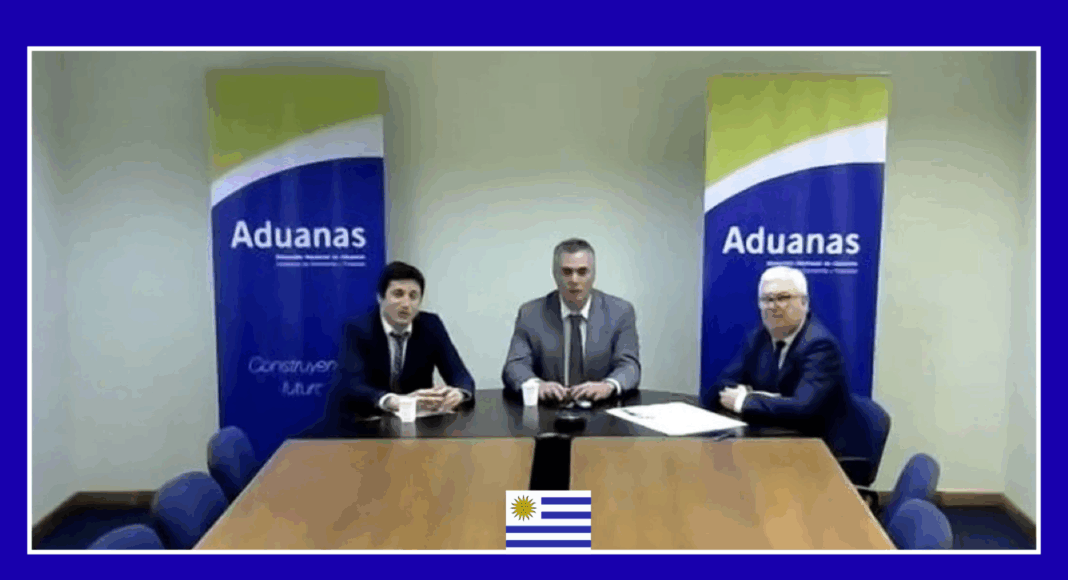

Just as it had been announcedOn Wednesday, November 26, 2025, the Uruguayan Customs Service held the 9th Customs Law Conference, a forum for exchange and debate that brought together 496 Subscribers, reflecting the interest and relevance of the topics addressed.
The institution, whose mission is "to ensure the safety of Uruguayan society and support the country's economic development through the control of goods crossing our customs borders," as established in its 2017-2030 Strategic Plan, continues to promote these types of activities -transmitted in a virtual format-, demonstrating its commitment to professional development and the constant improvement of its processes.
La opening was in charge of Dr. Santiago Berrondo, Administration Manager of the National Customs Directorate (DNA), who highlighted the responsibility involved in organizing an event of this nature and thanked the participants for their trust.
Due to a minor health issue, the National Director of Customs, Joaquín Serra, was unable to attend in person. Greetings were also conveyed from the Minister of Economy, Gabriel Hodore, who regretted being unable to join the numerous participants due to official commitments abroad.
Dr. Berrondo emphasized that "the diversity of views and opinions ensures fruitful debates, indispensable in customs matters, where legal discussions always seek the correct application of the rules to specific cases."
He stressed that, in a context of constant changes in foreign trade and the need for state control, “customs law must adapt quickly,” addressing two major thematic blocks: information technologies and customs law, and value and origin.
Regarding technology, Dr. Berrondo explained that innovation imposes a pace of change that cannot be controlled, but that opens opportunities for improvement and efficiency, for example, in risk management, optimization of human and material resources, automation of customs clearances, tariff classification, automated risk analysis, and subsequent selectivity. He also highlighted the importance of digital signatures, digital authentication, cybersecurity, and the protection of personal data as cornerstones for guaranteeing the legal validity and integrity of electronic documents.
He explained that the thematic block on value and origin considers essential practical issues for the correct collection of taxes and the proper application of the customs system, ensuring its relevance for both lawyers and other participants in foreign trade.
Based on the aboveMatías Prieto, Information Technology Manager at DNAThe first panel began, entitled “The pillars of digital customs”Prieto emphasized the importance of having a solid governance framework for the development of digital solutions, encompassing laws, standards, protocols, policies, and organizational structures that regulate the interaction between the public and private sectors.
He noted that customs “operates 24/7,” managing a high volume of daily transactions with more than 70 categories of active users, including customs brokers, freight forwarders, and operators involved in foreign trade. “Digital solutions must consider the interaction of all these people, guaranteeing the reliability, integrity, and availability of information.”
Mr. Prieto emphasized an important point: "Technology is not an end in itself, but a means to guarantee efficiency, transparency and security in foreign trade, constantly adapting to the regulatory and operational changes of the customs environment."
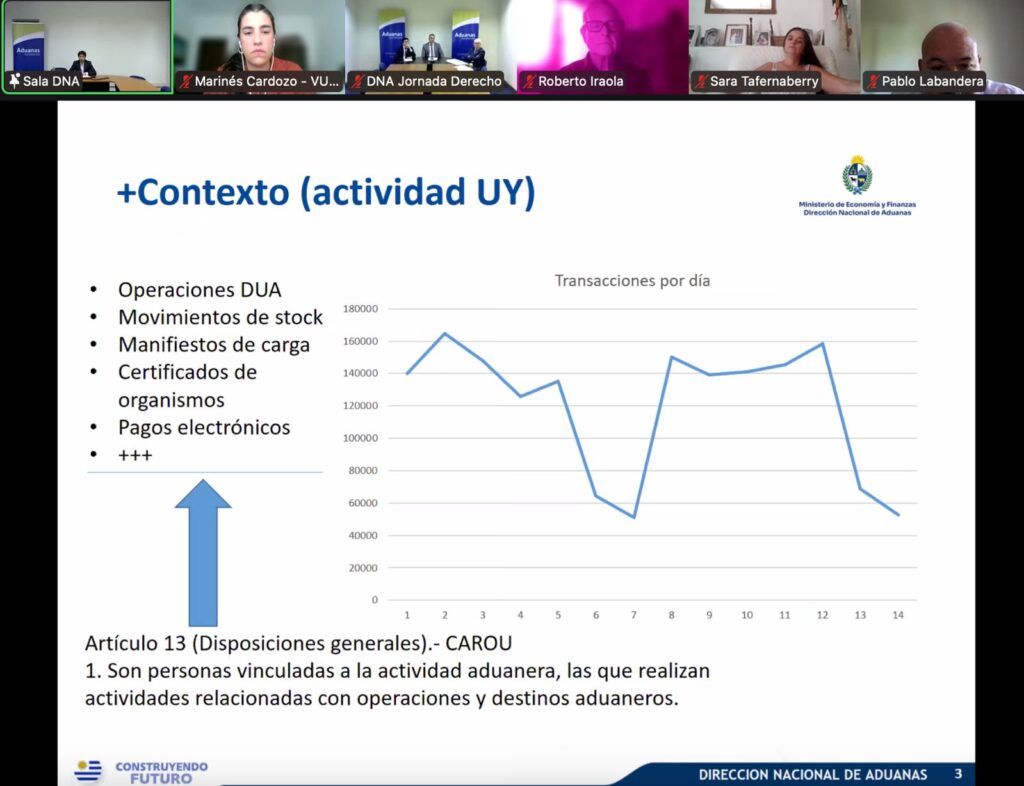
Panelists
The presentations at the event were completed by Leonardo Couto (INALOG), Cr. Miguel Palumbo, Manager of Control and Risk Management of the DNA, Dr. Marinés Cardozo, Legal Affairs Specialist of VUCE, Lic. Fiorella Cagnone from the Value and Origin Department of the DNA, Ms. Kelly Morguero, Technical Assistant to the Director General of Customs of Brazil, Lic. Analía Correa from the General Secretariat of ALADI, Lic. Valeria Batista and Lic. Lucía Cardozo, both from the Value and Origin Department of the DNA.
Thus, both the National Customs Directorate and the experts present agreed that rapid adaptation, technological innovation and a solid regulatory framework are fundamental for the development of a modern, efficient and reliable customs service.

Aduana News foi o primeiro jornal aduaneiro da Argentina a lançar sua versão digital. Com mais de 20 anos de trajetória, suas publicações e iniciativas têm como objetivo oferecer o conhecimento mais relevante sobre temas aduaneiros, contribuindo para a promoção do comércio seguro e da facilitação do comércio na região.