

Latin American companies must strengthen their resilience by diversifying markets and supply chains, using business intelligence, and ensuring regulatory compliance. All of this is happening in a context of global uncertainty, where geopolitics is once again at the center of business and investment decision-making. Only in this way can they reduce vulnerabilities and leverage the region's strategic role in the global energy and food transition, experts agreed during a virtual discussion organized on Tuesday by Insight LAC and hosted by Ana Basco.
Geopolitical conditions have always influenced businesses, but since the end of the Cold War, they have taken a backseat to macroeconomic, strategic, and operational concerns. Today, that trend has changed.
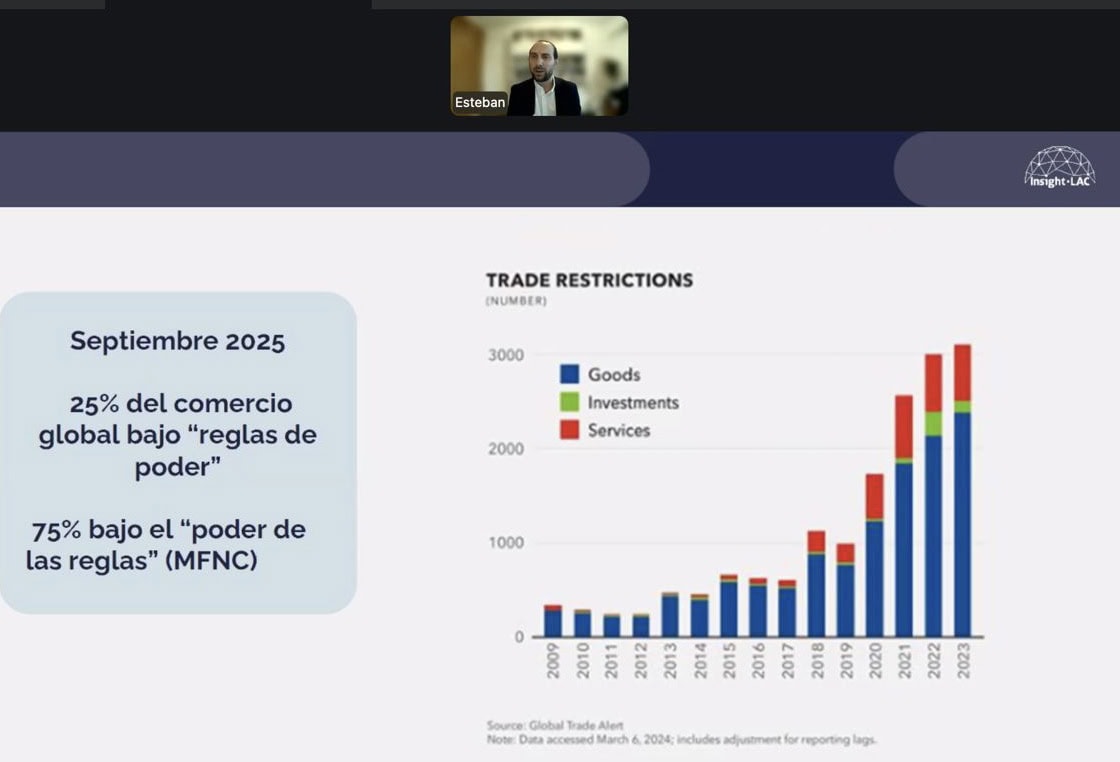
According to Esteban Actis, PhD in International Relations from Argentina, “both political risk and trade stability have become determining factors for growth, even surpassing other traditional risks.” Quoting Charles Keys, CEO of a US fund in Davos: “Geopolitics, which was previously on the margins of globalization, is now at the center of investment decisions.” Actis warns that the “weaponization” of the economy—tariffs, sanctions, and export controls—impacts supply chains and strategic markets, forcing companies to adapt and diversify. Sectors such as technology, pharmaceuticals, critical minerals, and electromobility are the most affected, and “geopolitical affinity influences the location of investments more than trade itself.” In its conclusion, it emphasizes that “following geopolitical trends is not an option: it is a strategic necessity.”
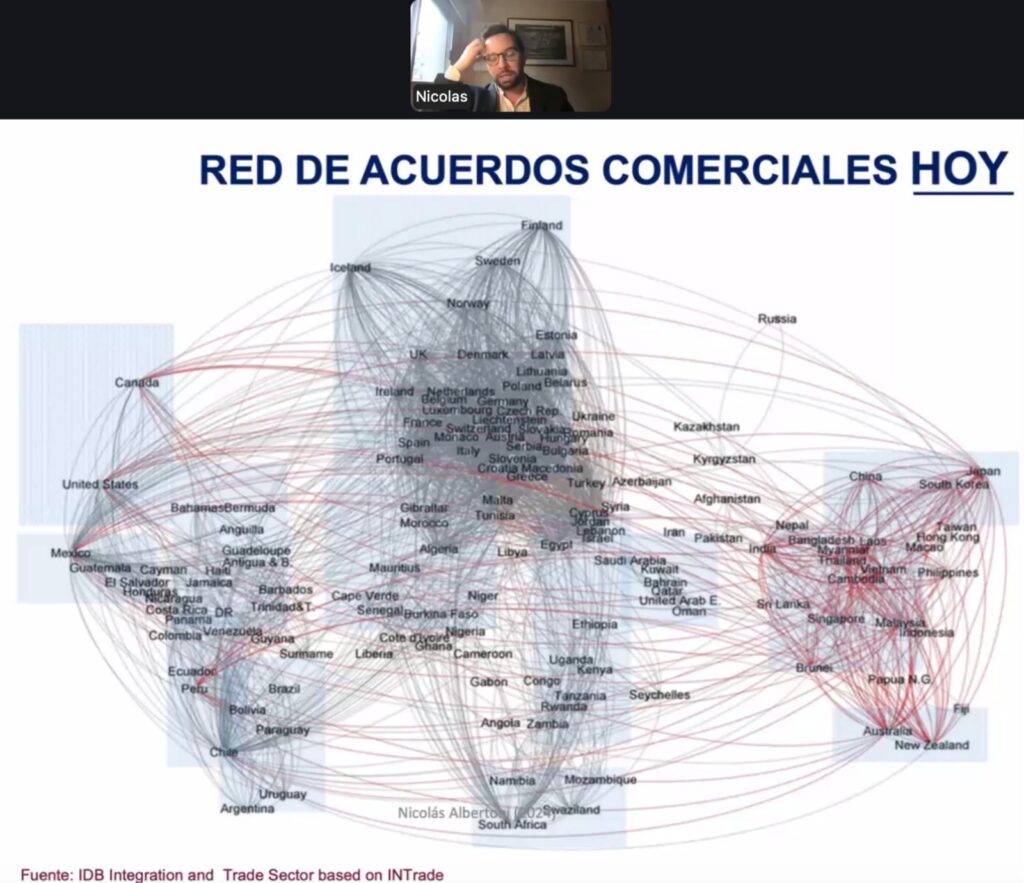
The specialist Nicolás Albertoni, former Vice-Chancellor of Uruguay (2022-2025) and PhD in Political Science and International Relations, expanded his analysis from the macro perspective to the importance of Latin America in the international context. According to Albertoni, political scientists Collier and Collier identify three key factors of our time: "uncertainty, interdependence, and complexity." One example is the price of oil, which reflects how geopolitical events impact the global economy, amplified by trade integration. China's entry into the WTO in 2001 intensified this interdependence, with nearly 600 trade agreements registered today, although only 10% correspond to deep integrations, highlighting the need to strengthen regional mechanisms such as MERCOSUR.
Another example of complexity is global value chains. Albertoni quoted Pietra Rivoli, an American professor of finance and international business at Georgetown University: "Before reaching the consumer, a simple white T-shirt passes through between 5 and 13 countries," reflecting cost efficiency but also vulnerability to crises, making initiatives such as nearshoring strategic.
Regarding Latin America, Albertoni emphasized that the region maintains global relevance despite internal challenges: it is "one of the few regions at peace," with strategic importance in renewable energy, biodiversity, and food production, but remains "one of the least commercially integrated regions," with more than 50% of MERCOSUR exports entering without tariff preferences. Faced with the China-US dichotomy, the region faces strategic decisions: the US prioritizes traditional agreements and legal frameworks, while China focuses on pragmatic cooperation and infrastructure, offering opportunities but also risks of dependency. Albertoni concludes that "Latin America can position itself as a third player, taking advantage of plurilateral agreements in the digital economy, trade, and strategic sectors, strengthening its autonomy and global relevance."
Renata Zilli, Mexican specialist in international political economy, agreed with Esteban and Nicolás that “we are facing a change of era.” “We are not simply adjusting the rules of the commercial game: we are facing a new game, and we are talking about facts, not fictions,” emphasizing that “commercial uncertainty is real and growing.” Although the indices of Trade Policy Uncertainty show a steady increase, “international trade remains above trend” thanks to the Most Favored Nation scheme.
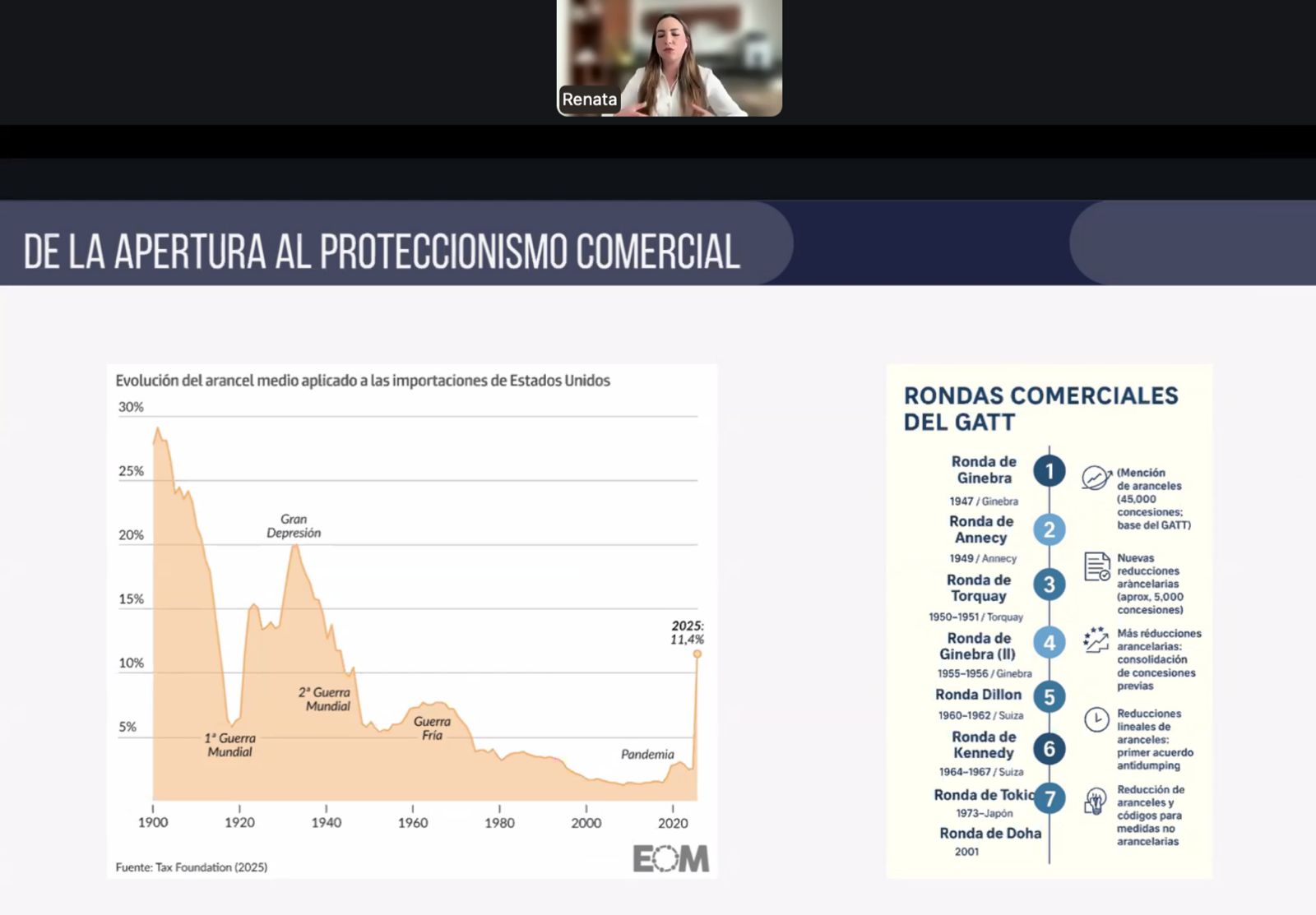
In Mexico, where 80% of trade, primarily manufacturing, goes to the United States, this creates risks but also "negotiation opportunities." Regarding the USMCA, Zilli emphasized that it includes stricter rules of origin, geopolitical clauses, and dispute resolution mechanisms. In his words, "Mexico functions as a laboratory for understanding the trade landscape of the future," balancing competitive advantages against China with regional risks and asymmetries. He also anticipated that the revision of the Treaty scheduled for 2026 will be key to defining the next steps in trade, labor, and energy policy.
As a final summary, Ana Basco, the director of Insight LAC, noted: “We are in a new geopolitical normal. Latin America has a strategic role and must continue exploring opportunities, both in the public and private sectors, to strengthen its resilience and commercial diversification.” The effort is worth it: companies in the region that think ahead and respond to today's uncertainty in the changing global order will be tomorrow's market leaders.

Aduana News foi o primeiro jornal aduaneiro da Argentina a lançar sua versão digital. Com mais de 20 anos de trajetória, suas publicações e iniciativas têm como objetivo oferecer o conhecimento mais relevante sobre temas aduaneiros, contribuindo para a promoção do comércio seguro e da facilitação do comércio na região.