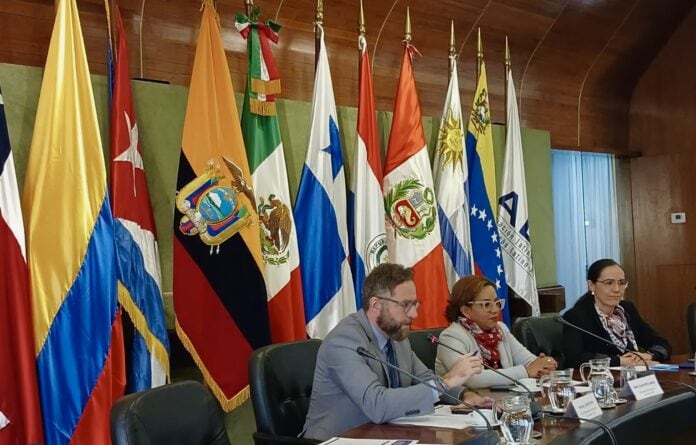
“ALADI considers it essential to promote exchange initiatives that promote good practices to contribute to the implementation of coordinated border management that allows us to eradicate bottlenecks, facilitating trade and making our countries more competitive,” said the official. Chairman of the Committee of Representatives, Permanent Representative of Cuba to ALADI, this Thursday (04.07.2024/XNUMX/XNUMX) during a seminar at the organization's headquarters.
La Ambassador Zulan Popa Danel He referred to this comprehensive reengineering of Border Posts as one of the issues with the greatest potential for benefits for our trade, although it is the most difficult to implement. “Political will, coordination and commitment are required not only at a national level but also at a binational level, both from the public and private sectors that operate throughout the logistics chain,” he said.
"Although there has been progress in some countries in the region, such as initiatives in MERCOSUR, the Andean Community and the Pacific Alliance, these efforts are still in their infancy," he said.
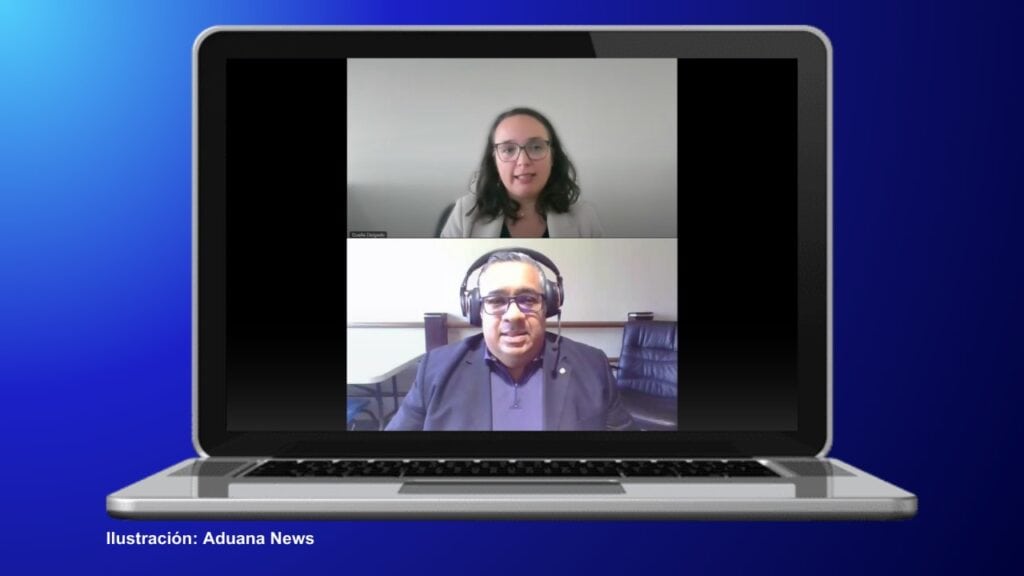
In that line, Queila Delgado, from the Inter-American Development Bank (IDB), revealed a series of challenges in the region, subject to high logistics costs, insecurity, non-interoperable VUCES, lack of adequate road infrastructure, complicated dispatch processes with obsolete equipment, poor risk management, unequal policies between countries, lack of integrated transportation, customs, quarantine and migration systems, and inadequately distributed logistics planning.
Based on international best practices in border management, the IDB representative referred to “Risk management, an essential step towards the effectiveness of border controls.” She explained that “Coordinated Border Management” is the initiative that improves the effectiveness or efficiency of border controls executed by two or more control entities.
According to the IDB proposal on “Coordinated Border Management”, it is vital to take into account the Comprehensive Risk System; that is to say, “on the one hand, an analysis for the consolidation of the variables and conditions that institutions consider relevant for security and control. On the other hand, users must maintain a level of risk perception that discourages illegal actions.”
Thus, the comprehensive risk management system makes it possible to strengthen the competitiveness of foreign trade, seeking to ensure the efficient and effective coordination of controls by the institutions responsible for them.
Queila Delgado stressed, in this regard, the importance of promoting a “consensus” on the scheme to be implemented, for which it must be considered that Coordinated Border Management requires “governance” based on coordination from the beginning. “This is more critical than digitalization (…) There is a need for dialogue,” she concluded.
In his speech, Eric Julio Rodriguez, representative of the World Customs Organization (OMA), explained the figure of Authorized Economic Operator (OAS) as a reliable operator in the coordinated management of borders.
He recalled that the model is based on the WCO's Regulatory Framework for Securing and Facilitating Global Trade (SAFE), which includes trade facilitation and border control measures in a coordinated manner between fiscal and parafiscal control entities to reduce the time and cost of transit and ensure efficient control of people and goods.
To this end, Eric Rodríguez highlighted the background, objectives and three pillars of the SAFE Framework.
Specifically, the specialist defined the term AEO as "a trusted operator that, after fulfilling a series of requirements, will be able to enjoy customs advantages throughout the territory and will be considered a safe and reliable operator for the rest of the members of the logistics chain throughout our territorial area and, when the mechanism of mutual recognition is developed, in a good part of the world" (IDB, Coordinated Border Management Course, module 1. Rafael Molina Martínez, page 31, 2015)
In this way, the company that demonstrates a high level of commitment to customs to take measures to protect the supply chain is involved in coordinated border management.
Clearly, coordinated border management is a model that facilitates the connection of the public (customs, agriculture, migration, health, anti-narcotics, other agencies) and private sectors, to optimize fiscal and parafiscal control, guarantee border security, promote trade facilitation and expedite the transit of people, without compromising the quality of the respective controls.
Such a model can be implemented at national, binational, regional and global levels depending on the degree of political integration. To this end, Eric Rodríguez referred to the “Mutual Recognition Agreement” understood as the “broad principle” under which the benefits duly granted by a customs office to its commercial operator are recognized and accepted by another customs office.
The aim of this instrument is to “manage risk in a comprehensive manner” and “secure the supply/logistics chain from origin to destination.”
According to the WCO, “more and more participants are using the AEO Programme”, that is, the tool aimed at strengthening and facilitating trade.
Examples of this are the experiences of the customs of Colombia, the Dominican Republic, Paraguay and Guatemala in applying the OEA to other public areas through inter-institutional work. Also, the implementation of the OEA to electronic commerce companies.
At the closing, Rafael participated Laurentino, Coordinator of ALADI's Origin Regime who agreed on the complexity and importance of effective collaboration between stakeholders to facilitate trade in the region.
The seminar can be viewed on the channel ALADI's YouTube channel.

Aduana News foi o primeiro jornal aduaneiro da Argentina a lançar sua versão digital. Com mais de 20 anos de trajetória, suas publicações e iniciativas têm como objetivo oferecer o conhecimento mais relevante sobre temas aduaneiros, contribuindo para a promoção do comércio seguro e da facilitação do comércio na região.