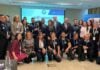
Customs authorities and officials from seven Central American countries met on Tuesday, October 13, to jointly discuss illegal trafficking in the region, an activity that has not stopped during the Covid-19 crisis, its organizers warned.
At the virtual conference on “Anti-Illegal Trade in Central America and Panama: Impact and best practices in times of pandemic”, organized by the American Chamber of Commerce and Industry of Costa Rica (Amcham), was attended by representatives from Colombia, Costa Rica, El Salvador, Guatemala, Honduras, Nicaragua and Panama.
Illicit trade is a highly complex phenomenon whose manifestations cannot be resolved with isolated policies carried out at the national level. For this reason, the Central American authorities have joined forces to share best practices and propose joint actions to combat it.
“Criminal convergence means that we cannot look at drug trafficking as an isolated activity. We are facing a threat to the democratic system that is infiltrating politics, has a significant presence in parliaments and the ability to undermine lawful activities and good businessmen,” he said in his presentation. Juan Ricardo Ortega, former Director of the National Tax and Customs Directorate of Colombia"Only regional cooperation, the exchange of information, the development of technological mechanisms and the training of human capital will allow us to defend ourselves in these times of economic vulnerability," he added.
Along the same lines, customs delegates stated what actions they took to reduce illicit trade.
Guatemala
Werner Ovalle, Guatemalan Customs Superintendent of SAT and Regional Vice President of the WCO, said:
“Customs have remained open, guaranteeing legal trade despite the pandemic. As control agencies, we have detected counterfeit goods such as masks and medicines that are trying to enter without paying taxes and without authorization from health authorities."
And he continued: “There have been generated inter-institutional action protocols at the national level through a regional customs risk management strategy that allows us to identify these networks.”
" Customs-Customs Relationship (SAFE) in the region is going through a positive moment. Everyone shares the vision of facilitating trade without losing control, the exchange of information, as part of the strategies we have within the regional framework.
We have been implementing technology to measure times and ensure that transports are passing through the routes they have declared.
The agenda of customs directors was focused on trade facilitation, but we need to incorporate aspects that improve controls.
Regarding the customs relationship with the private sector, It is essential to create mechanisms of trust. For this reason, it is positive that Amchan supports these discussions. However, the culture of legality must be included.
Regarding coordinated border management, “Illegal trade is combated with inter-institutional coordination at the national level and a regional perspective. In Guatemala we are working on inter-institutional border posts thanks to the support of the United States government. One challenge is to continue working within the framework of Central American integration; as countries we have had a democratic security treaty since 1995. The WCO has guidelines that help improve risk management.”
Ovalle encouraged strengthening coordination, controls, facilitation and advancing as customs at the Central American level.
Nicaragua
To its turn, Henry Thomson, customs expert and founding member of the International Academy of Customs Law, commented that in the face of the falsification of the material used to prevent Covid-19, Nicaragua activated the principle of coordinated border management.
El Salvador
Samadhy Martínez, Director General of Customs, made mention of the change in smuggling modality during the pandemic. And he noted: “Our strength was the coordinated work to observe the traceability and strengthening control with technologies such as the use of scanners.”
Costa Rica
Meanwhile, Alejandra Hernández, Vice Minister of Revenue of the Ministry of Finance, noted that the fiscal control police The US took a major role in terms of seizures. “We managed to seize 61 million items. The result is due to the intelligence work of our institutions, the traceability instruments and the inter-institutional coordination,” he said. “But also, “citizen awareness work”, Stressed.
Panama
Tayra Barsallo, Director General of the National Customs Authority, addressed the issue of cigarette smuggling in the country. In addition, he highlighted the work carried out in the Central American Customs Committee to promote Authorized Economic OperatorsThey are the ones who guarantee to customs that companies comply with the conditions and create confidence to facilitate intraregional transport.
Honduras
Juan José Vides, Executive Director of the Customs Administration, highlighted the work of deep integration between Honduras and Guatemala in the Corinto border crossing. Based on this concept, he encouraged “working together to confront the culture of legality, having protocols and plans to intelligently combat smuggling in the region.”
SIECA
At the end, the Ambassador Melvin Enrique Redondo, Secretary General of the Secretariat for Central American Economic Integration (SIECA) called for the fight against illicit trade to be incorporated into the regional agenda, to complement national initiatives.
«In that sense, the Central American Customs Committee "It is the cornerstone for addressing it," the Ambassador concluded.

Aduana News foi o primeiro jornal aduaneiro da Argentina a lançar sua versão digital. Com mais de 20 anos de trajetória, suas publicações e iniciativas têm como objetivo oferecer o conhecimento mais relevante sobre temas aduaneiros, contribuindo para a promoção do comércio seguro e da facilitação do comércio na região.