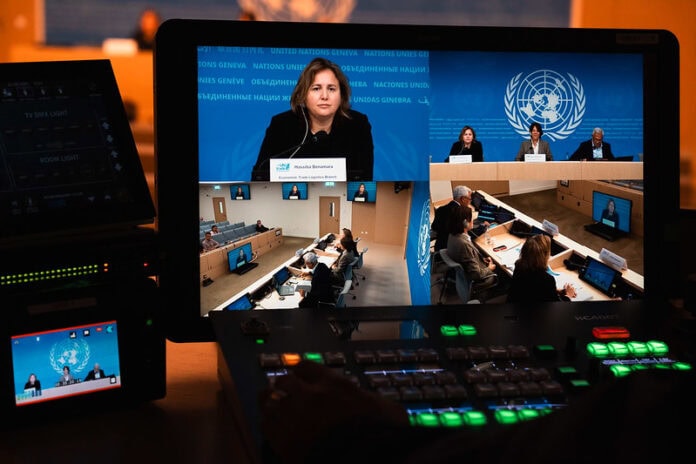
The UN Conference on Trade and Development (UNCTAD) urged governments and the maritime sector to take concrete steps to improve port efficiency, boost digitalization, and move toward a green transition, according to its Maritime Transport Report 2025, launched on September 24 in Geneva.
The report warns that maritime transport, responsible for more than 80% of global merchandise trade, faces a period of fragile growth, rising costs, and geopolitical uncertainty. After a strong rebound in 2024, volumes are expected to grow only 0,5% in 2025, while route diversions and international tensions kept vessels busier, with a record growth of nearly 6% in ton-miles.
UNCTAD noted that political tensions, new tariffs, changing trade patterns, and route reconfigurations are leading to longer voyages, missed ports, and higher costs. In the energy sector, coal and oil volumes are under pressure due to decarbonization, while gas trade continues to expand.
The critical mineralsEssential for batteries, renewable energy, and the digital economy, maritime logistics has become a focus of global competition, with maritime logistics key to developing countries taking advantage of opportunities. In this new geopolitical and economic landscape, Latin American countries, rich in strategic resources, are at the center of global attention.
At the same time, UNCTAD also warned of the volatility of freight rates, marked by disruptions such as the 2024 Red Sea crisis, and of the risks that current geopolitical tensions could pose in the Strait of Hormuz.
To face these challenges, the organization proposes concrete measures:
- Strengthening port efficiency Through automation, digitalization, and public-private partnerships, reducing delays, optimizing routes, and improving the predictability of maritime trade.
- Modernize the fleet and promote the use of alternative fuels, moving towards the ecological transition and reducing greenhouse gas (GHG) emissions.
- Ensure cybersecurity in port and maritime systems.
- Stabilize trade policies and protect developing countries from the impacts of high transport costs.
In explaining each measure, UNCTAD stresses that, given the proposed framework, the interoperability and transparent exchange of information are essential to improve the efficiency of maritime transport. In this regard, he recalls that the FAL Convention of 1965, amended in 2022, and the Article 10.4 of the WTO Trade Facilitation Agreement (TFA), which promotes the implementation of trade single windows (TSW), establish that the data must be submitted electronically only once and reused for all regulatory purposes, facilitating coordination between authorities and private operators.
The report also notes the reduction of GHG emissions as another strategic target, namely greenhouse gases that trap heat in the atmosphere and contribute to global warming. It notes that shipping emissions will grow by 5% in 2024, while only 8% of the global fleet is equipped to use alternative fuels. To meet this challenge, the IMO will propose the Net Zero Emissions Framework as a mandatory chapter of the MARPOL Convention in October 2025, with the goal of achieving net-zero GHG emissions by 2050. UNCTAD emphasizes that clear guidelines and active participation of all stakeholders will be essential for its effective implementation.
"“Transitions to zero carbon, digital systems and new trade routes must be just transitions,” said UNCTAD Secretary-General Rebeca Grynspan.They must empower, not exclude, and build resilience rather than deepen vulnerabilities.".
For full details of the analysis, please read the UNCTAD 2025 Revision of the Maritime Transport Report.
(I.e. https://unctad.org/system/files/official-document/rmt2025_en.pdf

Aduana News foi o primeiro jornal aduaneiro da Argentina a lançar sua versão digital. Com mais de 20 anos de trajetória, suas publicações e iniciativas têm como objetivo oferecer o conhecimento mais relevante sobre temas aduaneiros, contribuindo para a promoção do comércio seguro e da facilitação do comércio na região.