With the aim of improving accessibility and boosting consumption, the National Government ordered the Reduction of import tariffs from 35% to 20% for 14 categories of toys Through the Decree 781 / 2025 (Official Gazette, 10/31/2025). The adjustment eliminates a historical differential with respect to the rest of MERCOSUR and aims to contain prices, especially during periods of higher demand from children.
How much do we import, and from where?
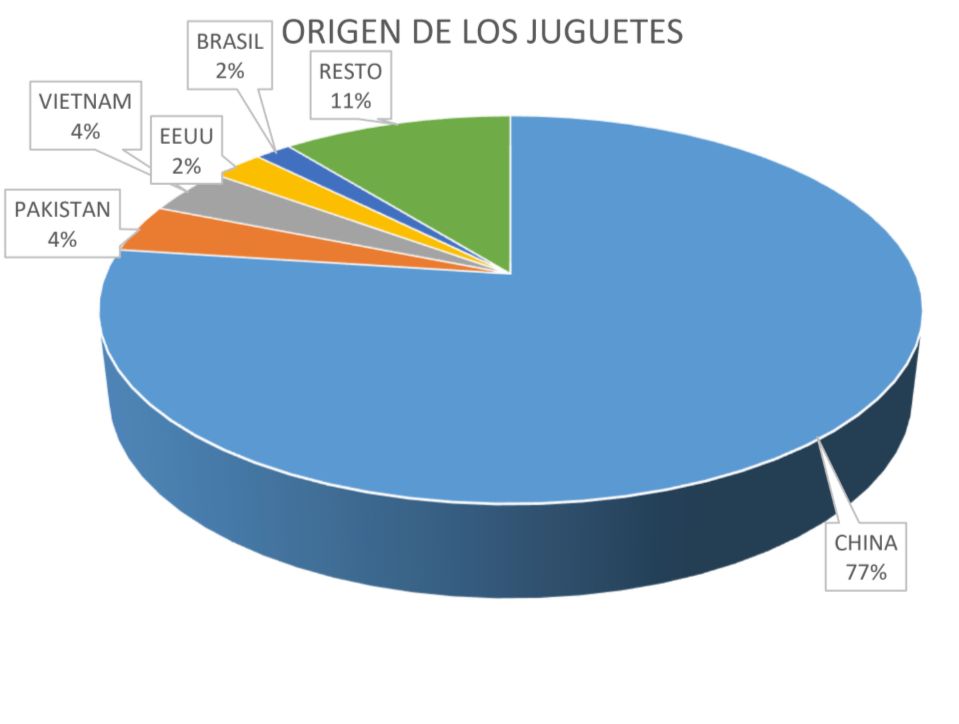
Following the recent announcement, the industry produced several analyses of the toy market. According to the consulting firm CIEN, China accounts for 77,1% of Argentine imports, consolidating its position as the country's and the world's main supplier. Far behind are Pakistan (4%), Vietnam (3,9%), the United States (2,5%), and Brazil (1,7%), while Mexico, Spain, Italy, and Indonesia contribute marginal amounts.
The evolution of the toy market
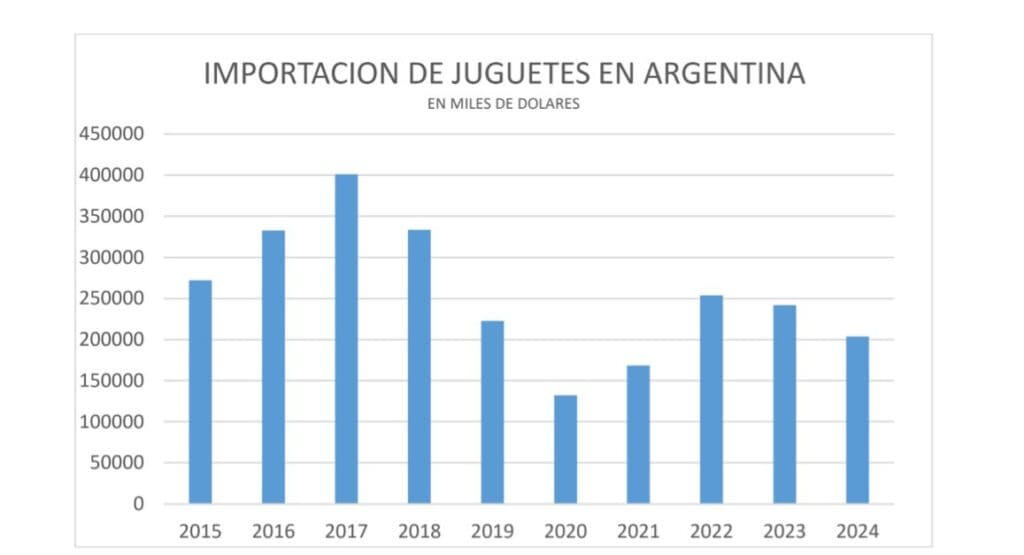
Analyzing the evolution of the toy market allows us to understand trends, anticipate opportunities, and evaluate how policies affect supply and demand. According to the CIEN report, imports have fluctuated in recent years: from one historic record of $401 million in 2017, The market fell to 203 million in 2024, after declining from 250 million in 2022 and 272 million in 2015. The slowdown was mainly explained by...as non-automatic licensing restrictions (DJAI, SEDI)while the post-pandemic recovery was gradual.
to 2025The market is showing significant momentum again: in the first half of the year, external purchases increased almost 150% year-on-year, although they are still below the levels of a decade ago.
Regional tariff comparison
With the reduction of import tariffs on toys from 35% to 20%, Argentina is no longer the country with the highest tariff protection in South America.According to the report by the consulting firm CIEN, the measure It aligns with Brazil and Uruguay and places it above Paraguay and markets with favorable trade agreements, such as Chile.
In the region, tariff levels for toys are distributed as follows: Chile and the European Union apply 0% thanks to trade agreements with China; Paraguay reduces its tax to 6%; Mexico maintains a 15%Whereas Brazil, Uruguay and Argentina apply 20%.
Before the change, Argentina applied the maximum allowed by the WTO (35%)above the MERCOSUR level. With the new tariff, the country regains regional competitiveness, maintaining a level of protection even higher than the world average, but more balanced with its partners in the bloc.
Some conclusions Of the report: China continues to lead The supply of toys in Argentina. imports rebound strong growth is expected in 2025 (+147%), although it has not yet reached the record of 2017. Tariff reductions bring the country closer to regional levels and could be reflected in lower prices for the consumer, while the local industry faces increased competitionespecially in low-cost products. In this context, the market is moving towards a more competitive and regionalized dynamic.

Aduana News foi o primeiro jornal aduaneiro da Argentina a lançar sua versão digital. Com mais de 20 anos de trajetória, suas publicações e iniciativas têm como objetivo oferecer o conhecimento mais relevante sobre temas aduaneiros, contribuindo para a promoção do comércio seguro e da facilitação do comércio na região.