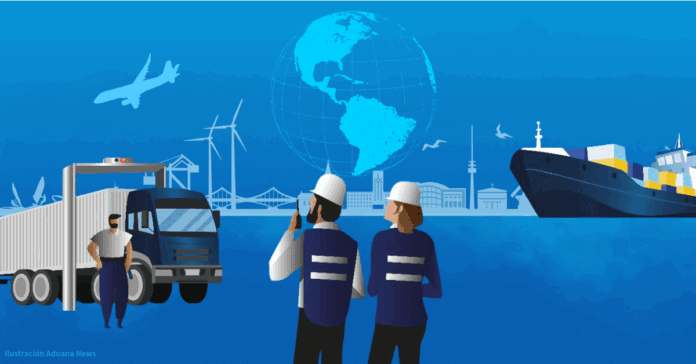
In a scenario of increasing fiscal constraints, improving public policies and services becomes a priority, positioning integrity—particularly customs integrity—as a key axis.
In this context, the World Customs Organization (WCO) warned about the impact of organized crime on customs administrations during its participation in the Global Forum on Integrity and Anti-Corruption of the Organisation for Economic Co-operation and Development (OECD), recently held in Paris.
El Deputy Secretary General of the WCO, Ricardo Treviño ChapaHe warned: “Threats, infiltration and pressure exerted by criminal networks represent a direct risk to institutional integrity and the security of international trade.”
critical indicator
In line with this warning, one of the most relevant findings comes from the Customs Integrity Perception Surveys (CIPS): in some administrations, up to 20% of officials reported having faced threats or pressure from organized crime. This data underscores the need to strengthen integrity frameworks in the customs sector.
The magnitude of customs' role in the global economy reinforces this concern. The 187 member administrations of the WCO—including those in Latin America and the Caribbean, such as Argentina—process more than 98% of world trade, positioning customs as a central actor in the international economic system. In this regard, it was emphasized that many public policies begin and end at borders, where customs constitutes the first face of the State for citizens and economic actors.
In line with this relevance, Chapter 2 of the Revised Kyoto Convention defines customs as the government service responsible for administering customs legislation, collecting duties and taxes, and enforcing rules related to the import, export, transit, and storage of goods.
Evidence-based management
In this context, the statements of the WCO Deputy Secretary General were part of the discussions held during a session of the Global Forum on Integrity and Anti-Corruption (GACIF), organized by the Anti-Corruption and Integrity Promotion Programme (A-CIP), one of the organization's main capacity-building programs.
The panel included specialists from the OECD, the International Chamber of Commerce, the State Customs Service of Ukraine and the WCO, who analyzed how building a culture of integrity in customs can boost economic development.
The value of data and performance indicators as key tools for designing more effective integrity policies was also highlighted. At this point, a structural weakness was highlighted: customs are still not fully incorporated into numerous national anti-corruption strategies.
To reverse this situation, experts agreed on the need to design evidence-based policies. Having reliable data allows for the identification of gaps between expected standards and actual practice, facilitating the adoption of more precise and effective corrective measures.
In response to this challenge, the WCO highlighted the role of specific tools such as Customs Integrity Perception Surveys (CIPS) and the Performance Measurement Mechanism (PMM), which allow for the generation of evidence, the identification of risks, and the strengthening of both the design and implementation of integrity policies.
In this context, the forum's conclusions were clear: strengthening integrity is not only an ethical issue, but a strategic condition for modern customs management. Its consolidation directly impacts trade resilience, economic competitiveness, and sustainable economic growth.
It is no coincidence, then, that this vision has been incorporated into the WCO Strategic Plan 2025-2028, where integrity is consolidated as a cross-cutting principle.
Because, ultimately, when integrity fails at the border, not only is control weakened: the entire system is compromised, with a direct impact on tax collection, trade security, and the country's competitiveness.

Aduana News foi o primeiro jornal aduaneiro da Argentina a lançar sua versão digital. Com mais de 20 anos de trajetória, suas publicações e iniciativas têm como objetivo oferecer o conhecimento mais relevante sobre temas aduaneiros, contribuindo para a promoção do comércio seguro e da facilitação do comércio na região.